
Skol Casino Registration: Account Setup for UK Players
 Available in GB
Skol Casino registration sits inside the UK-regulated remote-gambling framework. Before a customer can gamble, the operator must verify age and identity. UK Gambling Commission rules require remote licensees to establish identity information including name, address and date of birth, while additional evidence can be requested when electronic checks are not enough. That means account creation is not simply a username-and-password exercise.
UK players should prepare accurate personal details, expect age and identity checks, understand the account’s financial controls and use support if onboarding stops or asks for more information. The exact screen order can change, so the useful focus is on the information and checks required instead of a fixed click-by-click sequence.
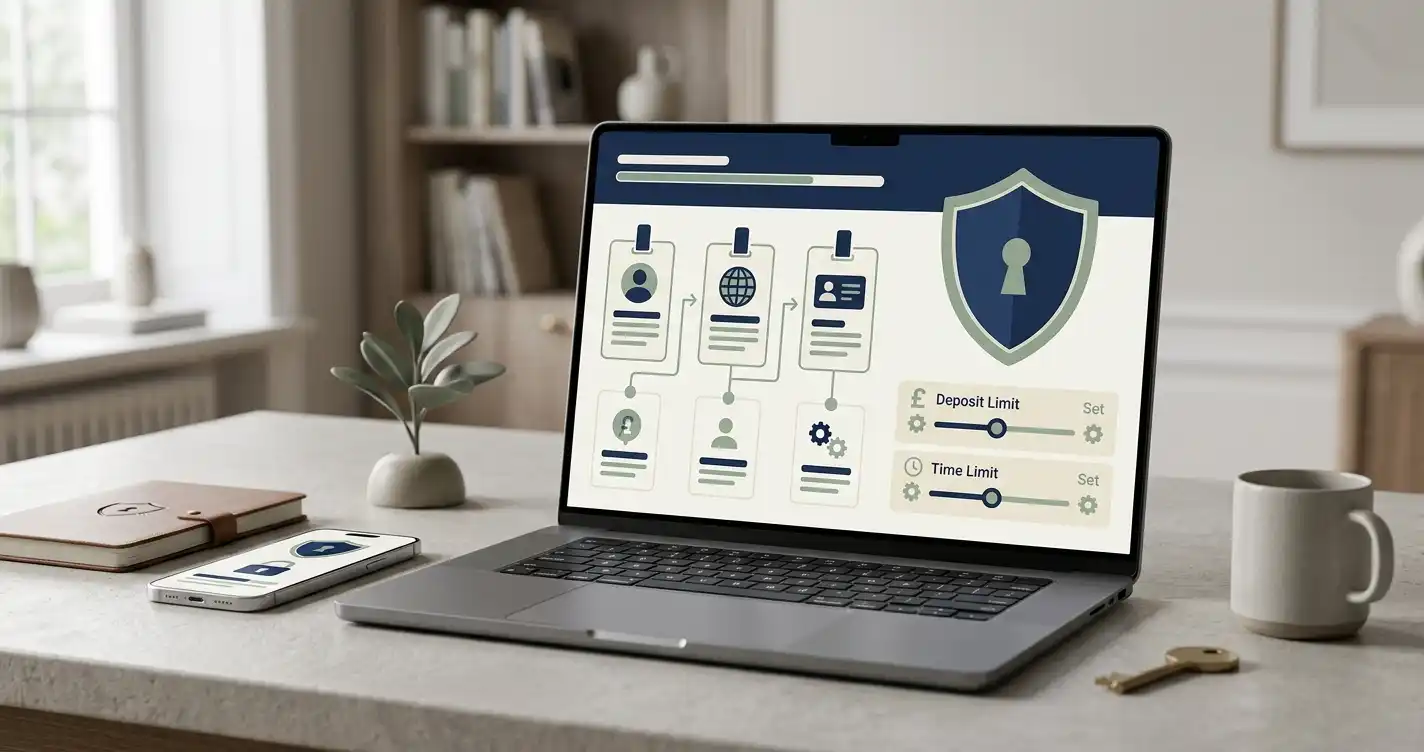
What information account setup usually needs
UKGC rules require remote operators to verify a customer’s identity before gambling and specify that the information must include, at minimum, name, address and date of birth. Those are therefore the core details UK players should expect to provide in some form during Skol account setup. The exact order of screens, field labels and optional questions can change, so the sequence shown on screen can differ without changing the underlying identity requirements.
Accuracy matters more than speed. Enter your legal name as it appears on reliable records, use your current residential address and provide your real date of birth. Small mismatches can make automated checks less effective and may lead to a request for further evidence. Avoid abbreviations or alternative spellings unless they are genuinely how your records are held.
You should also use contact details you can access. An email address may be needed for account communications or support, and keeping account information current helps avoid confusion later. Do not create duplicate accounts to bypass an onboarding problem. If the site does not accept a detail or a verification step stalls, use support as opposed to trying a second registration.
The same principle applies to passwords and device security. Choose a unique password, avoid sharing account access and sign out on shared devices. These are general account-safety habits in place of Skol-specific form requirements, but they are worth setting correctly at the beginning because gambling accounts combine personal and financial information.
Before starting, it helps to have a consistent version of the basic details you use on official records. Entering the same legal name and current address across the account and any later evidence reduces avoidable mismatches. This is not about supplying more information than requested; it is about making sure the information that is requested is accurate and can be checked against reliable records.
Age and identity verification before play
The UK Gambling Commission states that online gambling businesses must ask customers to prove age and identity before they gamble. Its current customer-identity licence condition requires operators to obtain and verify identity information before permitting gambling. This is a regulatory requirement, not an optional Skol feature.
Many checks can be completed electronically by matching account details with existing records. If those checks are insufficient, the operator may request documents. UKGC guidance gives examples such as a passport, driving licence or household bill, but it does not prescribe one universal document list for every casino. Skol’s exact request can therefore vary by customer and circumstance.
That distinction is important because document requests can vary by customer and circumstance. One customer might pass electronic verification with no upload, while another may need to provide evidence. The detailed Skol verification guide explains how the UKGC requirements fit with account-specific document requests.
The Commission also says operators should request additional verification information promptly when it is needed. They should not wait until withdrawal to demand identity information that could reasonably have been requested earlier, although other legal obligations can still create later information requests. From a user’s perspective, the practical lesson is to complete genuine verification requests early instead of postponing them until there is money to withdraw.
Deposits, limits and financial checks
Account setup also connects to payment and financial-protection rules. Skol supports GBP and mainstream payment categories such as debit cards, e-wallets and bank-based methods. The live cashier should be used to confirm which options appear for your account, while the Skol payment methods guide explains the available categories in more detail.
UK-regulated remote operators also use financial controls intended to reduce harm. Skol has account financial-limit tools, and the regulatory framework around deposit-limit presentation is changing. On 30 September 2026, new UKGC Remote Gambling and Software Technical Standards take effect requiring operators to offer gross deposit limits and reserve the term “deposit limit” for limits that meet that definition. From 30 September 2026, account-control wording should reflect the new gross-deposit standard.
There is a separate financial vulnerability check. Since 28 February 2025, remote operators must run a light-touch check when a customer’s deposits minus withdrawals exceed £150 in a rolling 30-day period, unless a qualifying check or assessment has already been carried out within the relevant preceding period. The check uses public-record information for significant indicators of financial vulnerability. It should not be confused with a universal manual affordability interview or with a customer-set deposit limit.
| Control or check | Purpose | What it means during account use |
|---|---|---|
| Age and identity verification | Confirm who the customer is and that they are old enough to gamble | Required before gambling |
| Customer-set financial limits | Help manage how much money can be deposited or otherwise controlled | Use the account tools and read the live definitions |
| Financial vulnerability check | Identify significant vulnerability indicators from public information | Triggered at the current regulatory threshold, not simply at registration |
Keeping these concepts separate prevents unnecessary confusion. A deposit limit is something the account uses to control funding, identity verification establishes who you are, and a vulnerability check is a regulatory risk process. They can all appear in the same customer journey without being the same thing.
Using support if account setup stalls
Skol’s support channels are 24/7 live chat and email at [email protected]. Telephone support is not listed as an available channel. If registration stalls, live chat is the most immediate route for asking whether the problem is a data-entry issue, a verification request or a technical problem with the browser session.
When contacting support, describe the stage as opposed to sending sensitive documents into a chat window unless the operator explicitly instructs you to use an approved secure route. For example, say that identity verification is pending or that the cashier does not load, and ask where the required information should be submitted. This helps distinguish a genuine account process from an unsafe request delivered through an unofficial channel.
Email can be useful where you need a written record or where the issue is not urgent. Use the support address and include enough account context for the team to identify the issue without sending passwords, full payment-card details or other secrets. Legitimate support should never need your account password.
If a support agent explains that more verification is needed, ask what category of information is required and what secure upload route should be used. The UKGC allows operators to request additional information when necessary, but the precise documents and timing depend on the circumstances. Verification time can vary with the type of check and any additional information required.
If the setup process stops, describe the exact stage in place of sending a vague request. Note whether the issue concerns sign-in, identity matching, a document request, the cashier or an account limit. That gives support a clearer starting point and avoids mixing separate account processes into one problem. Use the official support route linked from the site and avoid sending sensitive identity material through an unrelated channel.
Where a message asks for additional action, read it before repeatedly resubmitting the same information. A second upload or duplicate account can create more confusion instead of resolving the original check. Following the account instructions in sequence is usually the clearest way to keep the record consistent.
Common setup mistakes to avoid
The first avoidable mistake is entering details that do not match reliable records. A nickname, old address or mistyped date of birth can make an automated identity check harder. Correct data also matters later if the account needs to establish payment ownership or respond to a regulatory request.
The second is assuming that a promotional offer changes the verification requirement. Skol’s current UK welcome structure is points-based and unlocks wager-free spins as qualifying wagering earns points, but a bonus does not remove the need for age and identity checks. If the offer matters to you, read the welcome offer guide and the current terms separately from the registration process.
The third is rushing into a deposit before understanding limits and payment routes. Check that the account currency and payment method are what you expect, set a financial limit that suits your budget, and remember that new UKGC terminology rules take effect from 30 September 2026. A registration should end with an account you understand, not merely an account that happens to be open.
The fourth is looking for shortcuts around verification. Avoid third-party “no KYC” instructions, duplicate-account tactics or requests to send documents through unofficial messaging services. Skol operates in the UK-regulated market, where identity checks are a required part of the customer relationship. If you cannot complete a legitimate request, the right route is support or a decision not to proceed.
Finally, keep a record of important account settings. Know which email you used, where financial controls are located, and how to reach support. This reduces friction later if you change devices or need help with login, payments or verification.
Another avoidable mistake is treating registration as a race to the deposit screen. The account details, identity checks and financial controls are part of the same regulated setup, so it is more useful to finish each stage accurately than to rush through fields and correct them later. Reviewing the account profile before funding can catch spelling, address or contact mistakes while they are still easy to fix.
What UK players should prepare before opening a Skol account
Before registering, have accurate personal details available, use an email account you control and be ready for age and identity verification before gambling. You may pass electronically, or you may be asked for further evidence; the exact documents can vary by account, so follow the request shown in the secure account area.
Also decide how you intend to fund the account and what financial limit makes sense before the first deposit. From 30 September 2026, UKGC rules change how remote operators must define and present deposit limits, while the separate £150 net-deposit vulnerability-check threshold is already in force. If anything in the signup or verification process is unclear, use Skol’s live chat or support email as opposed to guessing. Check these basics before moving on to the cashier. Keep details consistent across registration and later verification requests. For the broader picture of the operator, licensing, games and current features, return to the full review.
A short preparation check can make the process easier: use accurate personal details, make sure your contact information is accessible, review the account controls and know where the verification area is before depositing. If the account asks for additional evidence, respond through the secure process shown there in place of creating a second account or sending documents through an unrelated channel.
Prepared by the Skol Casino editorial staff.